The Invisible Living World: Beyond Our Naked Eye class 8 Notes
Welcome to Class 8 Science chapter 8 notes. On this page, you will find notes, questions, and answers to class 8 science chapter. These The Invisible Living World: Beyond Our Naked Eye class 8 Notes, explanations, examples, and questions and answers are according to CBSE and the NCERT textbook. If you like the study material, feel free to share the link as much as possible.
Introduction
Organisms that are so small that they can only be seen through a microscope are called microorganisms or microbes.
The study of microorganisms is known as microbiology.
Most organisms are hardy and can be found in almost any kind of environment – hot desert, polar ice caps, salt water, marsh lands and inside other organisms.
Types of microorganisms:
There are five major groups of microorganism. These are as follows:
Bacteria
Algae
Protozoa
Fungi
Viruses
Bacteria:
They are simple living organisms which are found all around us. They are mostly single- celled tiny organisms, but they live together in colonies of millions.
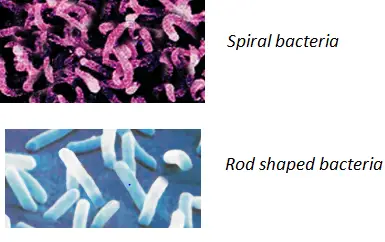
Bacteria are found in three different shapes:
Rod shaped, called bacilli.
Spherical shaped, called cocci.
Spiral called spirilla.
Algae:
Algae are simple plant- like organisms which are usually aquatic in nature.
They contain a cell wall and chlorophyll and can make their own food by photosynthesis.
Algae can be unicellular or multicellular.
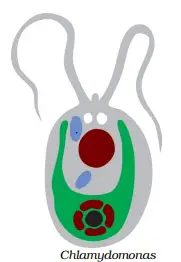
Some of the common examples are diatoms, chlamydomonas, and seaweed.
Protozoa:
These are unicellular microscopic organisms similar to animals that can move about to capture food and are heterotrophic in nature.
They are mostly aquatic in nature.
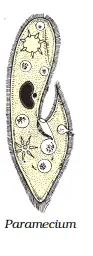
Amoeba, paramecium are some examples of protozoa.
Fungi:
Plant -like organisms that do not contain chlorophyll are called Fungi.
Fungi may be unicellular (Yeast) or multicellular (Bread mould) and are found in warm and moist places.
Fungi can be heterotrophic, saprophytic or parasitic in nutrition.
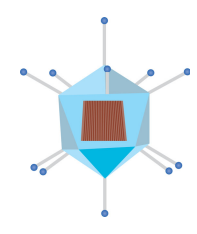
Viruses can only be seen with electron microscope.
Viruses can reproduce only inside the bodies of other organisms, which mean they need a host.
A virus is like a non- living thing outside the body of other organisms. Therefore, it is a borderline between a living and a non- living thing.
Useful Microorganims
Microorganisms are useful in the following ways:
In food and beverage industry
In making medicines and vaccines
In agriculture
In cleaning the environment
Food and beverage industry:
Bacteria help us in making certain foods. Lactobacillus is a bacterium that sours milk and is used to makes curd from milk.
Many fungi like Mushrooms and morels are edible which are rich source of Vitamin B
Yeast is commonly employed in preparing food items like bread, cakes, idli, dosa, dhokla etc.
Yeast is also used in breweries for making wines by the process of fermentation.
Making medicines and vaccines:
Bacteria and fungi are used to make medicines called antibiotics.
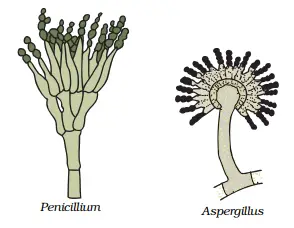
The first antibiotic, penicillin was discovered by Alexander Flemming using the fungus penicillium.
Some common antibiotics are streptomycin and terramycin.
Microbes are used to make vaccines. Vaccines are weakened or dead germs introduced into the body. They offer protection against diseases like tuberculosis, polio etc. by producing anti- bodies.
Bacteria and Yeast are used in making vitamin B complex tablets.
The human hormonal called insulin can also be obtained from bacteria.
In Agriculture:
Some bacteria like Rhizobium, blue green algae like Nostoc, live in the root nodules of plants such as gram, pea etc. These bacteria absorb the nitrogen of the atmosphere and convert it into nitrate which serves as natural fertilizers for plants, hence, enhancing soil fertility.
In cleaning the environment:
Microbes help to keep our environment clean by decomposing dead matter. They decomposed substances are recycled as these get reused from the soil by plants.
Some bacteria decompose sewage and other waste in water. This is nature’s method of keeping the environment free from pollution.
Harmful Microorganisms
Microorganisms that cause diseases in human, animals and plants are called pathogens or germs.
Germs may enter the body of living organisms through air, contaminated food and water, from an infected person by direct or indirect contact or by a carrier.
Diseases that can spread from an infected person to a healthy individual through air, water or direct contact are called communicable diseases. Examples: Common cold, chicken pox, AIDS etc.
Micro organisms also cause diseases in animals and plants. For examples-
Anthrax is a disease caused by bacterium and affects human and cattle.
A virus causes the dangerous foot and mouth disease in cattle.
Citrus canker is a bacterial disease that affects trees of citrus fruits and is spread by air.
Rust of wheat is a viral disease that affects vegetable like bhindi & spread by insects.
Malaria is actually caused by pathogen called plasmodium (protozoa) which is transmitted by female Anopheles mosquito.
Dengue is caused by dengue virus and spread by female Aedes mosquito.
Preventing the spread of Communicable diseases:
Some simple methods of limiting the spread of communicable diseases are:
To keep the infected person separated from others & to advice his/ her to keep a handkerchief on the nose and mouth while sneezing.
To keep our environment or surrounding clean.
Never let garbage collect in the neighborhood.
Timely vaccination against diseases should also be taken.
To prevent mosquitoes from breeding we should not allow water to collect anywhere in our neighborhoods.
Food spoilage:
Many bacteria and fungi grow on food items and produce certain toxic substances. This makes the food unfit for consumption. Consuming such food can cause a serious illness called food poisoning.
Food preservation:
Processing of food to prevent their spoilage and to retain their nutritive value for period is called food preservation.
Food can be preserved using many methods:-
Heating: heating food to a high temperature kills microbes. For example: Milk and water are boiled to kill microbes.
Cooling: food can be kept in refrigerator at about 5˚C which delays its spoilage.
Canning: canning is done to package or preserve food or drink by putting it in sealed, airtight containers.
Salting: Fruit and vegetables can be preserved by using salt and then drying. Salts prevent the growth of microbes.
Sweetening: Excess sugar can also works on the same principle as salting. Jams, jellies & squashes are preserved by this method.
Dry or dehydration: Dehydration of food remaining water from it. This stops microorganisms from growing as they cannot grow without water.
Chemical preservatives: Chemicals like sodium benzoate and sodium metabisulphite prevent microbial attack and are often use to preserve jams, sauces & ketchup.
Check your Knowledge
Fill in the blanks
1. __________________ are simple plant- like organisms which are usually aquatic in nature.
2.______ are unicellular microscopic organisms similar to animals that can move about to capture food and are heterotrophic in nature.
3. Viruses can only be seen with __________________.
4. The first antibiotic, penicillin was discovered by __________________
5. Rhizobium, bacteria absorb the __________________ of the atmosphere and convert it into nitrate which serves as natural fertilizers for plants, hence, enhancing soil fertility.
6. __________________ is a disease caused by bacterium and affects human and cattle.
7. __________________ is a bacterial disease that affects trees of citrus fruits
8. Dengue is spread by _______
9. The process of packaging or preserving food or drink by putting it in sealed, airtight containers is called ______
10. Chemical preservatives like _____ and _____ prevent microbial attack in jams, sauces & ketchup. Check your Answers
The cell is the basic structural and functional unit of life. All living organisms are made up of cells. Cells make
tissues, tissues make organs, organs make organ systems and organ systems make a living organism. Thus, the cell is the building block, or the structural unit of the living body.
Cells were discovered for the first time by Robert Hooke in 1665. He observed a piece of cork under his microscope.
He saw that the cork was made up of many small boxes. He called these little boxes cells. These box-like structures were actually dead cells.
Living cells were observed by Anton Von Leeuwenhoek for the first time using improved microscopes.
Cell Theory
Later in 1838, Mathias Schleiden and Theodor Schwann put forward the cell theory of life.
According to this theory:
All living organisms are made up of cells.
New cells arise from pre-existing cells.
All cells are similar in structure and function but are not identical.
The function of an organism depends on the way the cells work or the functions they perform.
Shapes and sizes
Depending on their function, the cells show a variation in their shapes and sizes.
They may be oval, spindle-shaped, spherical etc.
Sizes of cells are measured in micrometer or microns. (1 micrometer = 1 10-6m)
Most cells range in size from 5 micrometer to 15 micrometer.
Bacterial cells are the smallest cells.
The longest cells in our body are the nerve cells.
The egg of ostrich is the largest cell- it is a single cell.
Cell Number
According to the number of cells, organisms are broadly classified into two groups- unicellular and multicellular. Unicellular: Organisms made up of a single cell are called unicellular organisms. The single cell performs all the functions needed for sustaining life- growth, movement, digestion. Amoeba, Paramecium and bacteria are examples of unicellular organisms. Multicellular: Organisms made up of many cells are called multicellular organisms. The cells of such organisms usually perform specialized functions. Most plants and animals are examples of multicellular organisms.
Structure of a cell
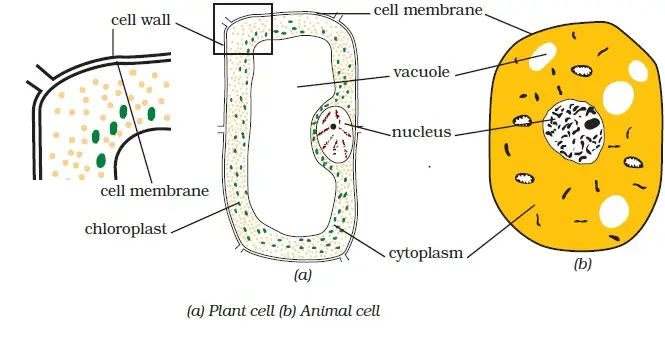
The basic components of cell are cytoplasm, cell membrane, nucleus and organelles.
Cell membrane
The thin outer layer of the cell is called the cell membrane or the plasma membrane.
It separates the cell and its contents from the surroundings.
It protects the inner cell contents.
It protects the cell and gives it a shape.
It is selectively permeable and allows water, minerals and other necessary substances to pass through it.
It controls what passes in and out of the cell
Cell Wall
Cell wall is present only in plant cells.
It is an additional wall outside the cell membrane.
It is thick wall made up of cellulose.
The cell wall gives shape to the plant cell, offer protection and provide rigidity to the cell.
The cell wall is important for plants since they do not have a skeleton for support and protection, nor they can move to escape environmental stress.
cytoplasm
The cytoplasm is a jelly-like substance that makes up most of the inside of the cell.
The cytoplasm has the nucleus and various other cellular components within it.
These components are called cell organelles.
Nucleus
The nucleus is a spherical body present inside the cell. It is the control centre of the cell.
The nucleus is surrounded by the nuclear membrane and the liquid present inside is called nucleoplasm.
The nucleus and the cytoplasm together make up the protoplasm.
A smaller spherical structure present inside the nucleus, called Nucleolus plays an important role in protein synthesis.
The nucleus also has a thread-like network called chromatin.
The chromatin organizes itself into rod-like structures when the cell has to divide. These rod-like structures are called chromosomes. They contain the DNA inside them. DNA has the genes that help in transfer of characteristics from parent to the offspring. Therefore, DNA forms the hereditary material in most organisms.
Note: The nucleus and cytoplasm together make up the protoplasm.
Cell Organelles:
Organelles are small structures scattered in the cytoplasm that work together to carry out life processes.
There are various types of cell organelles that perform different functions. Some of these are as follows:
MITOCHONDRIA:
Mitochondria are small rod-like structures. They provide energy in the form of ATP. Therefore, they are known as powerhouse of the cell.
RIBOSOMES:
Ribosomes are tiny structure found either attached to the surface of endoplasmic reticulum or scattered in the cytoplasm. Ribosomes are associated with protein synthesis.
PLASTIDS:
Plastids are disc-shaped structures present only in plant cells. They can be of three types-chloroplasts, chromoplasts and leucoplasts.
GOLGI BODIES:
The cytoplasm contains a large number of membranous sacs- like structures called Golgi bodies. They are concerned with secreting useful substances such as enzymes and hormones.
VACUOLES:
Vacuoles are sac-like structures in the cell. In mature plant cells, they occupy most of the space within the cell and help to store food, water and wastes. In animal cells, vacuoles are smaller and may be greater in number. They help in waste removal and digestion.
ENDOPLASMIC RETICULUM:
The endoplasmic reticulum is a network of membranous tubes that connect the cell membrane with the nuclear membrane. The endoplasmic reticulum helps to transport substances in and out of cells.
CENTRIOLES AND CENTROSOMES:
The centrioles and centrosomes play an important role in cell division. They are present only in animal cells and are absent in plant cells.
LYSOSOMES:
Lysosomes are called as suicidal bags. They are small rounded sacs filled with tissue dissolving enzymes. They help in the digestion of foreign bodies and worn out cell parts.
Cell Division:
A cell is very small when it is formed. On receiving nutrition, it grows and reaches a certain size after which it divides to form two cells. This process is known as cell division, and the cells formed are known as daughter cells.
Cell division is also necessary for replacement of dead cells. Million of cells are die and replaced every second in our body.
Comparison Between Animal And Plant Cells:
S.No
Animal Cell
Plant Cell
1
Smaller in size
larger in size
2
Cell membrane is present but Cell wall is absent
both cell membrane and cell wall are present
3
plastids are absent
plastids are usually present
4
Vacuoles are smaller and more in number
One large vacuole is present in the cell
5
Centrioles, centrosomes and lysosomes are present
Centrioles, centrosomes and lysosomes are absent
Check your Knowledge
Fill in the blanks
1. The __________________ is the basic structural and functional unit of life.
2. Cells make tissues, tissues make organs, organs make organ systems and organ systems make a __________________ .
3.Cells were discovered for the first time by __________________ in 1665.
4.Sizes of cells are measured in ______.
5.The longest cells in our body are the _____.
6.The thin outer layer of the Cell is called the ______.
7.The __________________ is a jelly-like substance that makes up most of the inside of the cell.
8. __________________ has the genes that help in transfer of characteristics from parent to the offspring.
9.__________________ are small rod-like structures.they are known as powerhouse of the cell.
10. The __________________ reticulum is a network of membranous tubes that connect the cell membrane with the nuclear membrane.
11. __________________ are called as suicidal bags.
12. The finger like projection in amoeba is called _____. Check your Answers
1. Cell
2. living organism
3. Robert Hooke
4. micrometer or microns
5. nerve cells
6. plasma membrane
7. cytoplasm
8. DNA
9. MITOCHONDRIA
10. ENDOPLASMIC
11. LYSOSOMES
12. pseudopodia